
Call: 08071930543
 Send Inquiry
 Send Inquiry
Cement Autoclaves
MOQ : 1 Piece
Cement Autoclaves Specification
- Power
- 50 Watt (w)
- Product Type
- Autoclave
- Application
- Industrial
- Voltage
- 240 Volt (v)
- Material
- Stainless Steel
- Usage
- Use For Industrial And Laboratory
- Weight
- 50-70 Upto Kilograms (kg)
Cement Autoclaves Trade Information
- Minimum Order Quantity
- 1 Piece
- Payment Terms
- Letter of Credit (L/C), Telegraphic Transfer (T/T), Letter of Credit at Sight (Sight L/C)
- Supply Ability
- 10 Pieces Per Month
- Delivery Time
- 1 Week
- Main Export Market(s)
- Western Europe, Australia, South America, Eastern Europe, Middle East, Central America, Asia, North America, Africa
- Main Domestic Market
- All India
About Cement Autoclaves
Cement Autoclaves
We are engaged in manufacturing and exporting a wide range of Cement Autoclaves. These products includes a stainless steel cylinder with a welded heat insulated voer that is confined in a heat insulated metal housing, mounted on a sturdy supporting frame. In order to control the electric heating units, the attached control unit holds in a sensitive pressure regulator, pressure gauze, power switches and pilot lights. In addition to this, to hold specimens above water level in a vertical position and autoclave, laboratory cement autoclave is offered by us with test bar holder and special rack to expose them in the same manner.
Technical specifications:
- Inside chamber dimensions are 10.5 cm diameter x 40.5 cm height
- The device is suitable for operation on 230 V, 50 Hz, single phase A.C. supply.
Durable Stainless Steel Construction
Each cement autoclave is crafted from high-grade stainless steel to withstand daily industrial and laboratory use. This robust build enables resistance to corrosion and ensures long-lasting performance, making it suitable for frequent and demanding testing operations.
Optimized for Industrial and Laboratory Applications
Our cement autoclaves are specifically designed to cater to both laboratory research and large-scale industrial processes. Their moderate weight range (50-70 kg) allows for mobility while providing stability during high-pressure testing.
Energy-Efficient Performance
Operating at 240 volts with a power requirement of just 50 watts, these autoclaves deliver efficient performance without excessive energy consumption. This makes them suitable for continuous use in professional environments, supporting your operational needs.
FAQs of Cement Autoclaves:
Q: How is a cement autoclave used in industrial and laboratory settings?
A: A cement autoclave is used to test the expansion and durability of cement by exposing specimens to high-pressure steam at controlled temperatures. This process simulates long-term environmental conditions and helps determine the materials quality before use in construction.Q: What are the main benefits of using a stainless steel cement autoclave?
A: The primary benefits include durability, corrosion resistance, and the ability to withstand intense testing conditions. Stainless steel construction ensures longevity and reliability, which is essential for maintaining test accuracy over time.Q: When should industries or laboratories perform tests using a cement autoclave?
A: Cement autoclave testing should be performed during product development, quality control, and routine checks to ensure cement meets industry standards. Regular testing helps prevent structural issues in the field by identifying weaknesses before deployment.Q: Where can I source high-quality cement autoclaves in India?
A: You can obtain high-quality cement autoclaves from reputable distributors, exporters, manufacturers, suppliers, and traders across India. Our company provides a comprehensive range and offers tailored solutions to match your specific requirements.Q: What is the process for operating a cement autoclave?
A: To operate the autoclave, place cement specimens inside the chamber, seal it, and set the required temperature and pressure. The device automatically maintains conditions until the test cycle completes, after which samples are removed and analyzed for expansion and durability.Q: What makes these autoclaves suitable for both laboratory and industrial use?
A: Their sturdy design, manageable weight (50-70 kg), and energy efficiency make them ideal for both settings. They provide precise test conditions needed in labs alongside the durability required for industrial environments.Q: How does using a cement autoclave enhance product quality and safety?
A: By accurately testing cement properties under controlled conditions, autoclaves help ensure only high-quality, durable cement is used in construction, thereby reducing the risk of structural failures and enhancing safety standards in end applications.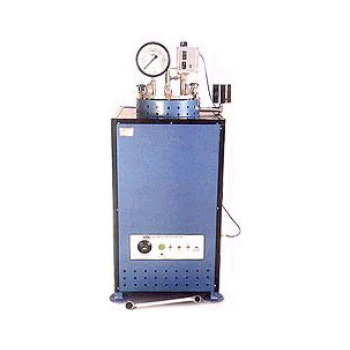
Tell us about your requirement

Price:
Quantity
Select Unit
- 50
- 100
- 200
- 250
- 500
- 1000+
Additional detail
Mobile number
Email

More Products in AUTOCLAVES Category
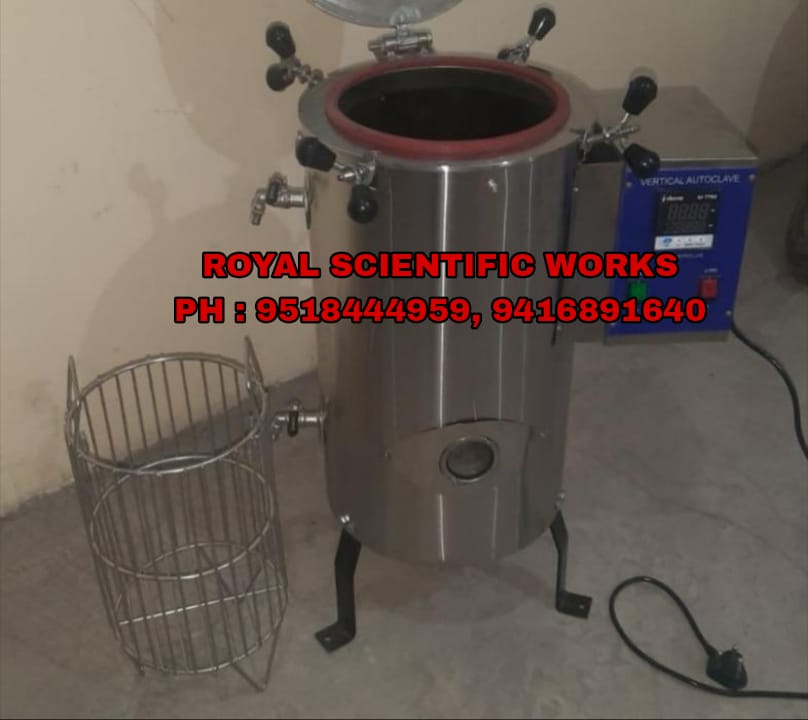
STAINLESS STEEL VERTICAL AUTOCLAVE
Price 34000.0 INR / Piece
Minimum Order Quantity : 1 Piece
Usage : Use For Hospital And Laboratory
Material : Stainless Steel
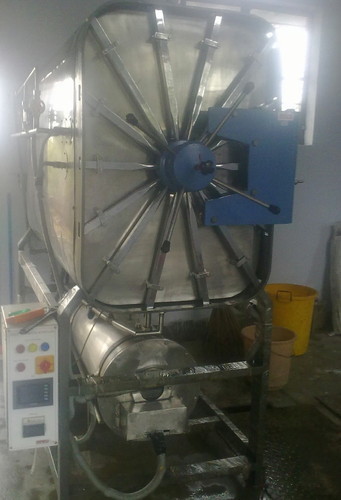
Fully Automatic Horizontal Autoclaves
Price Range 12000.00 - 90000.00 INR / Piece
Minimum Order Quantity : 1 Piece
Weight : 5070 Upto Kilograms (kg)
Usage : Use For Industrial And Laboratory
Material : Stainless Steel
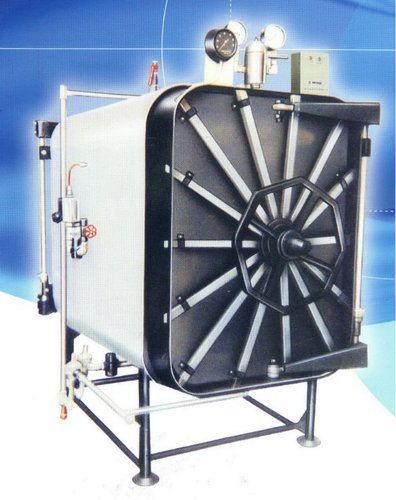
Horizontal Rectangular Autoclave Deluxe Model
Price Range 30000.00 - 300000.00 INR / Piece
Minimum Order Quantity : 1 Piece
Weight : 5070 Upto Kilograms (kg)
Usage : Use For Industrial And Laboratory
Material : Stainless Steel
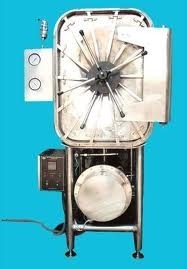
Horizontal Rectangular Autoclaves
Price Range 12000.00 - 90000.00 INR / Piece
Minimum Order Quantity : 1 Piece
Weight : 5070 Upto Kilograms (kg)
Usage : Use For Industrial And Laboratory
Material : Stainless Steel

"We are accepting only bulk quantity orders."
Contact Details
ROYAL SCIENTIFIC WORKS
GST : 06BOHPS6662C1ZS
- Village Keshopur, P.O Sambhalkha, Distt Ambala, Ambala Cantt - 133101, Haryana, India
- Phone :08071930543
 Send Inquiry
Developed and Managed by Infocom Network Private Limited.
