
Call: 08071930543
 Send Inquiry
 Send Inquiry
STEREO MICROSCOPE
MOQ : 1 Unit
STEREO MICROSCOPE Specification
- Focus System
- Rack and pinion mechanism with tension adjustment
- Spare Parts
- Eyepieces, objective lenses, stage plates, bulb or LED
- Features
- Three-dimensional observation, robust metal body, anti-fungal treated optics, easy operation.
- Theory
- Stereo microscopy enables observation of samples with three-dimensional vision, suitable for biological and industrial inspection.
- Drawtube
- Binocular
- Focal Distance
- Approx. 100 mm
- Magnification
- 20x/40x (standard), optional 10x/30x or 10x/20x
- Dimensions
- Approx. 280 mm (H) x 180 mm (L) x 120 mm (W)
- Focus Range
- Approx. 50 mm
- Eyepieces
- Wide field WF 10x paired eyepieces
- Eyepiece Tube
- Inclined at 45 degrees for comfortable viewing
- Illumination
- Incident and transmitted illumination with adjustable intensity
- Coarse Adjustment Range
- Approx. 50 mm
- Working Stage
- Round flat stage plate, with stage clips
- View Head
- Binocular
- Interpupillary Distance
- Adjustable 5575 mm
- Objective Achromatic
- 2x and 4x Achromatic objectives
- Light Source
- Halogen or LED, dual light
- Diopter Adjustment
- Provided on one eyepiece tube
- Head Movement
- Up and down movement along vertical pillar
- Application Areas
- Education, metallurgy, electronics, entomology, botany, jewelry inspection
- Net Weight
- Approx. 3 kg
- Arm Stand Material
- Sturdy alloy with anti-vibration design
- Optical System
- Green optical glass with anti-reflection coating
- Operating Temperature Range
- 10C 40C
- Power Supply
- 220V AC, 50/60 Hz or battery-operated for LED version
- Stage Size
- 90 mm diameter glass and black/white stage plates included
- Accessory Options
- Supplementary lenses, camera attachment, dust cover
About STEREO MICROSCOPE
Stereo microscope designed for rugged environment. Optimal imaging, color and clarity produces erect 3D images. Examination of opaque as well as transparent specimens is made possible through top (reflected) as well as bottom (transmitted) illumination system. With its sturdy stand, high performance objectives (1x/3x, 2x/4x), High eye point focusable eyepieces with optional reticle holders and a 45 inclined observationPrecision and Versatility
Engineered for clarity and depth, the stereo microscope utilizes achromatic objectives and wide field eyepieces. This configuration guarantees true color representation and three-dimensional visualization of samples, making it a versatile tool across various scientific and industrial disciplines.
Robust Construction and Ergonomics
The microscopes sturdy alloy arm stand and anti-vibration design maintain image stability, even during prolonged use. Its lightweight build and ergonomic 45-degree inclined binocular head ensure user comfort, vital for classroom demonstrations and meticulous laboratory inspections.
Efficient Illumination and Adaptability
With both incident and transmitted light sources, the microscope accommodates diverse sample types. Adjustable halogen or LED illumination lets users tailor brightness to specimen requirements, while battery operation on LED models enables fieldwork flexibility.
FAQs of STEREO MICROSCOPE:
Q: How do I adjust the focus and interpupillary distance on the stereo microscope?
A: To adjust focus, turn the rack and pinion knob located on the arm stand, which has a tension adjustment for smooth operation. The interpupillary distance can be set between 55 and 75 mm by sliding the eyepiece tubes closer or farther apart, ensuring comfortable viewing for different users.Q: What types of samples can I observe with this stereo microscope?
A: This microscope is suitable for observing specimens in biology, metallurgy, electronics, entomology, botany, and jewelry inspection. Its three-dimensional imaging enables detailed study of solid, opaque, or translucent objects.Q: When should I use the incident versus transmitted illumination?
A: Incident illumination is ideal for opaque samples such as minerals, circuit boards, or jewelry, while transmitted light suits translucent specimens like thin botanical slices or insect wings. Selection depends on sample transparency and inspection requirements.Q: Where can this microscope be utilized efficiently?
A: The microscope is designed for use in laboratories, classrooms, factories, research institutions, jewelry workshops, and field sites requiring battery-operated LED lighting. Its robust construction and adjustable illumination make it adaptable to varied environments.Q: What process is involved in changing magnification levels?
A: Magnification is changed by selecting different objective lenses (2x or 4x achromatic objectives) and pairing them with compatible eyepieces. Standard configuration provides 20x/40x; optional eyepieces or supplementary lenses enable 10x/30x or 10x/20x magnification.Q: How does the anti-fungal treated optics benefit users?
A: Anti-fungal treatment preserves the quality of optical glass, preventing fungal growth in humid environments. This ensures long-term clarity and reliability, especially critical in tropical climates or settings with high moisture.Q: What accessory options are available for this stereo microscope?
A: Accessories include supplementary lenses for different magnification ranges, camera attachments for digital imaging, spare eyepieces, objective lenses, stage plates, bulbs, or LEDs, and a protective dust cover for safe storage.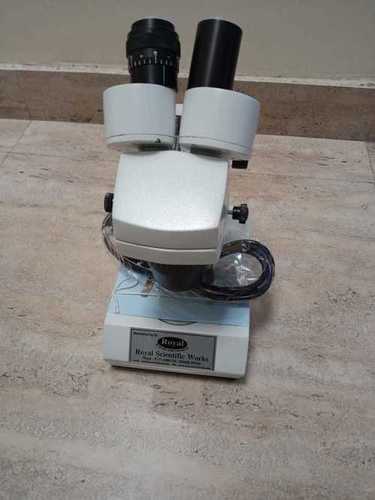
Tell us about your requirement

Price:
Quantity
Select Unit
- 50
- 100
- 200
- 250
- 500
- 1000+
Additional detail
Mobile number
Email

More Products in MICROSCOPES Category
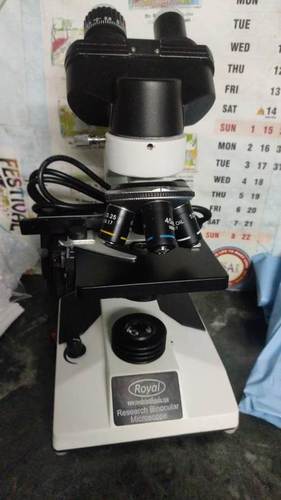
Pathological Research Microscope
Theory : Other, Pathological research microscope designed for diverse clinical and laboratory applications.
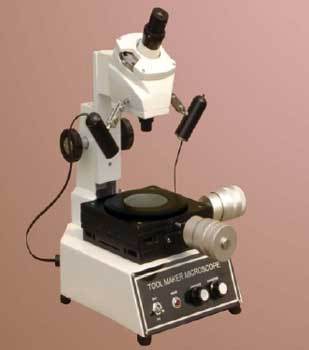
Tool Maker Microscope
Minimum Order Quantity : 1 , , Piece
Theory : Biological Microscope
Application : Lab Field
Weight : 1015 Kilograms (kg)
Material : Stainless Steel
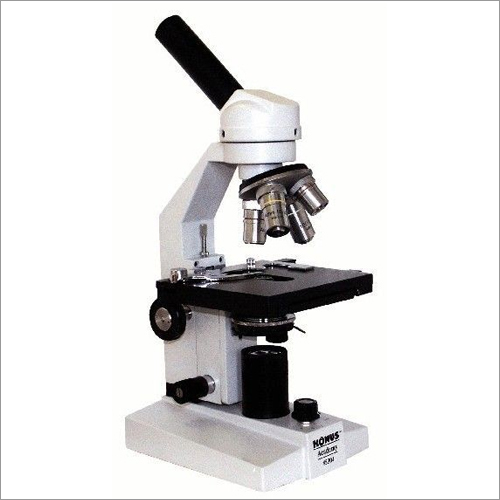
Monocular Microscope
Price 21500 INR / Piece
Minimum Order Quantity : 1 Piece
Theory : Biological Microscope
Application : Lab Field
Weight : 1015 Kilograms (kg)
Material : Stainless Steel
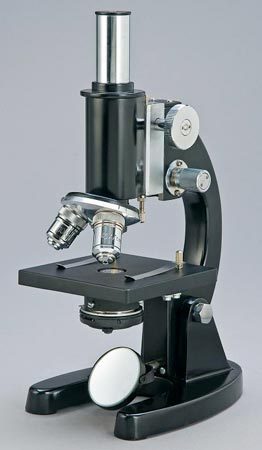
Student Microscope
Price 1660 INR / Piece
Minimum Order Quantity : 1 Piece
Theory : Biological Microscope
Application : Lab Field
Weight : 1015 Kilograms (kg)
Material : Stainless Steel

"We are accepting only bulk quantity orders."
Contact Details
ROYAL SCIENTIFIC WORKS
GST : 06BOHPS6662C1ZS
- Village Keshopur, P.O Sambhalkha, Distt Ambala, Ambala Cantt - 133101, Haryana, India
- Phone :08071930543
 Send Inquiry
Developed and Managed by Infocom Network Private Limited.
